Buoy 10 Fishing Tips
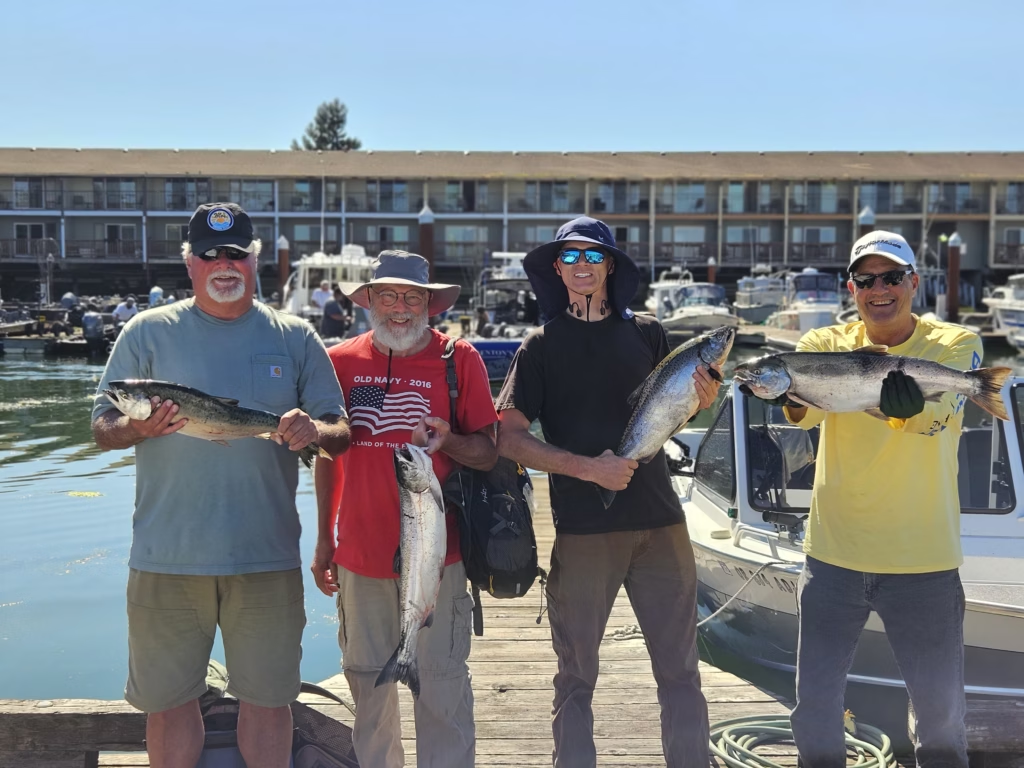
Buoy 10 Salmon fishing is one of the most exciting experiences on the Columbia River. The fall Chinook and Coho fuel up on bait before entering the river. Warmer river water clashing with cool ocean water pushes the hammer down on their throttle. Hundreds of thousands of salmon rush into the mouth of the Columbia over a period of about 3 months. The result is some of the most hard-fighting salmon fishing you will ever experience. Getting everything right can move you from the sidelines to the middle of the game. These Buoy 10 fishing tips are intended to get you off to a good start. In the spirit of full transparency, while this is what has worked for me, the fish haven’t read it. Don’t be afraid to try something different if you aren’t getting bites. My number one rule is to don’t argue with the fish!
I plan on more articles later. You can also book a trip if you want to see what I do in person.
Table of contents
Hardware for Buoy 10
Buoy 10 is almost entirely a game of trolling with flashers at different depths. Plenty of Fall Chinook and Coho meet their end on both triangle and 360 flashers. At its most basic, the setup includes a line-lock slider snapped to a cannonball weight. Behind the slider is a bead-chain swivel connected to a bumper, usually made of heavy monofilament followed by another swivel. A flasher is connected with another swivel behind it. The leader and lure follow.
What Flashers, Bumpers, and Leaders do I use for Buoy 10 Salmon Fishing?
This is the number one most talked about Buoy 10 fishing tip. The job of a flasher is to attract fish to your setup. They mostly do this in two ways. The first is with vibration through the water and the second is with light. Vibrations travel farther than light. Some flashers also use LED lights and piezoelectric diodes to create additional attraction. You need both working together to get the fish close and direct them to your lure. When it comes to colors, water conditions are important. Chrome is all-purpose. Blue, Chartreuse, and UV tend to do better in clearer and/or deeper water. In murkier water and shallower, reds, pinks, and oranges are the ticket.
360 flashers

Spend 10 minutes on the water and you will find out that 360 flashers are the most popular choice. Usually made of plastic, 360 flashers make big circular swings in the water. This allows them to attract fish from a wider area. They are intended to mimic another salmon chasing and slashing after a bait fish. This triggers a feeding instinct in nearby salmon, drawing them in and initiating a strike. The best flashers generate a lot of action at a wide range of trolling speeds. Color is also important for homing the fish in on your presentation. Fin heights, flasher shape, coatings and tape all affect these factors.
I have extensively used and caught fish with flashers made by Shortbus, Protroll, Brad’s, and a few other companies. The most effective flashers I have used for salmon fishing, including Buoy 10 are the ones made by X2 Fishing. I tested them independently first. I was so impressed that I approached them for a sponsorship agreement and they agreed.
Inline Flashers
Inline flashers have a similar job as 360 flashers. One key difference is that they mimic the flash and faster vibration of a school of bait. Like the name implies, they don’t move around in the water but rather spin around a central axis. While 360 flashers cover more water for suspended fish, inline flashers excel when fish are in a narrow depth window. This includes hugging the bottom. They are the preferred choice if you are using cut plug herring as a bait. The extra action of a 360 flasher can cause cut plug bait to “blow out” unless you use a helmet. I’ve effectively used inline flashers from Yakima Bait, Shortbus, and Leo.
Weights
With 360 flashers you will want to use heavy weights. By heavy, I mean between 16 and 20 ounces. Some people use as heavy as 24 ounces. The big surface area of the flasher creates a lot of drag. Getting in front of the fish is 90% of the game. The weight is how you do that, and one of the most important parts of your setup. WIth that said, I have occasionally watched a salmon on the sonar streak through 40 feet of water to strike. If you remember no other Buoy 10 fishing tip, make sure you get your gear at the same depth as the fish.
When I rig up an inline flasher for hugging the bottom, I always put my lead on a 10″ dropper. This allows the lead to bump the bottom without beating up your bait. When on the bottom you should see the lead touch every now and then. Just don’t drag it. I usually use between 12 and 16 oz of lead depending on how deep I’m trying to fish. When I can, I go lighter.
Bumpers and leaders
Proclaiming “the perfect leader and bumper length combination” is a great way to start an argument at the boat ramp. I vary my leader and bumper lengths depending on conditions and how I think the fish are acting.
The job of the bumper is to create distance from the point that the weight attaches. This allows the 360 flashers to move. Shorter bumpers give a faster thump but a narrower radius on the flasher. Shorter bumpers are also helpful for netting if you’re fishing alone. For inline flashers a bumper prevents the dropper from your lead from tangling with your leader. I typically vary my lengths from 18″ to 24″. I always keep some extra long bumpers on hand if I need to slow down my flashers.
To make a bumper, I crimp 125 pound tuna leader with a 6-bead chain swivel on either end., The bead chains seem to do better in weedy water. I attach Hawaiian style snaps to reduce tangles and hook them to the rest of my setup. Some guides tie their bumpers on as they go, usually using heavy (50lb or higher) monofilament. Several companies sell pre-made bumpers. For 360 flashers you want to reduce the amount of drag between the weight and the flasher. A thinner material is better as long as it’s strong enough. Some manufacturers even make titanium bumpers.
The leader does the same thing except between the bait and the flasher. Longer leaders will create a more stable pattern for the lure while shorter ones make it faster and more erratic. Shorter leaders help the fish locate the bait in darker or murkier water.
What Lures and Bait Do I use for Buoy 10 Fishing?
No list of Buoy 10 fishing tips would be complete without talking about lures. For 360 fishing, soft spinner rigs are a popular choice, especially in the upper parts of the estuary. I really like the UV paint quality from Oregon Tackle and High Class Tackle . I use both of them on my Buoy 10 fishing charter trips. Other manufacturers like VIP, Shortbus, and Hanford Reach all make excellent blades as well.
Closer to the ocean, trolling cut plug or whole herring and anchovies tends to be more effective. Stuffer baits like Brad’s Super Baits and Yakima Spin N Fish can work well in both areas. Stuffer baits are especially effective once the Coho start entering. The color rules for flashers apply to lures as well. Once the water starts cooling down in late September and October hardware seems to lose its effectiveness. At that point, nothing can beat a whole anchovy behind a flasher for late fall Coho.

What fishing rod should I use for Buoy 10 fishing?
With heavy gear comes heavy rods. You want a rod with decent backbone and a tip that will react with the motion of the flasher. If you fish with a lot of people on the boat and 360 flashers, longer rods will help prevent tangles. If it’s pretty just going to be one or two people in the boat, then a shorter rod will do. Shorter rods also make netting fish easier if you’re on your own. I use 9’6″ rods on my back corners and 10’6″ rods on my fronts. I know some folks that go to 11′ or more for their front rods for more clearance.
As far as manufacturers go, I prefer Talon. I used one of their rods in a fight over a fish with a seal and it held up great. I’ve since joined their pro-program and have not been disappointed. I’ve also used the Guide Select and SST lines by Okuma. They did well for me. I did have some issues with the eyelets on the Okuma rods with extra heavy weight on them. The Talon rods use Fuji guides and they’re worth the little bit higher cost. The Lamiglas Redline series is a good budget rod for 360 fishing as well. I generally recommend a heavy to medium heavy weight for the rod. If you’re going to dedicate yourself to inline flashers I recommend going with a medium-heavy rod. A softer tip helps with a bait bite.
What reel and line do you use for Buoy 10 Salmon Fishing?
There are lots of reel choices. I generally recommend a level-wind with a line counter. The line counter prevents you from having to hand measure your line length. This lets you get your gear back to the same depth more consistently. If you’re going to spend serious money, this is the place to do it. You’re often dealing with heavy gear, saltwater, and the occasional battle with a seal or sea lion. Not to mention the pressure a large fall Chinook can put on a drag. WIth that said, there are several more “affordable” options as a go-to.
The reels I’m most familiar with are the Okuma Coldwater series and the Daiwa Lexa. Both of these are low-profile reels. I prefer the low profile since it lets me just use my thumb to release the drag. I use a 300 size for either one. The drags on the Okuma’s feel a bit smoother to me. The Lexa seems to hold up better to corrosion. The finish on the Lexa is a harder glossy one which holds up to abuse a bit better. Okuma does make a SS version of the Coldwater that uses more stainless steel for corrosion resistance. They do charge extra for that one. I’ve gone with the Lexas just because of the durability/maintenance factor. I fished the Coldwaters for plenty of years and still have a few around as backups.
Line
I spool my reels with 50-60lb braid. This gives me a lot of power to keep from losing the expensive hardware at the other end. Since I’m often managing a lot of lines at once I prefer brighter colors that I can see quickly. Braid generally comes in 8 carrier or 4 carrier. The 8 carrier tends to be rounder and smoother while the 4 carrier tends to be thinner with less blowback. Some of the newer 8 carrier lines are getting thinner though. For line comparisons, I recommend line laboratory. They do a lot more testing than I ever could.
What Days and Spots do you recommend for Buoy 10 Salmon Fishing?
More than any other fishery, Buoy 10 is about timing and observing conditions. There is a lot of water to cover but tides and temperatures are everything. The time of season also matters. I spent years bending the ears of other fishermen for their Buoy 10 fishing tips. I’m now reasonably confident that I generally have it figured out. WIth that said, there’s no mechanical formula. Learning the how and why is much more important than storing a set of coordinates in your plotter. Below is a general guide.
Buoy 10 fishing locations for the early season – Summer and Fall Chinook
This is usually a time with smaller tides. On opening day the fish will be everywhere. As the stacked up fish get thinned out, the action moves downriver. A line from Hammond to the Chinook channel entrance gives a good eastern boundary for where you want to fish. Most fish will be closer to the ocean. If the bite is slow I often cross the bar and fish for Chinook and Coho in the Ocean.
The river will be full of a combination of Summer Chinook and Tule Chinook (usually more tan colored). The Tule’s are larger and fight harder but often have a lower meat quality. Some are very far along in their pre-spawn phase resulting in softer, paler meat. Others may surprise you with firm dark red meat and good taste. Don’t rule them out. Tule’s do have a distinctive scent when you get them in the boat. Some find it objectionable. If you keep one, don’t worry, the meat doesn’t taste like that. The smell is just in the extra slime coat for going up river in warm water.
Buoy 10 fishing locations for Mid August- Fall Chinook, some Coho
In the mid season the fish distribute more. Bigger tides speed the fish upriver and out of the area. This means fewer fish in the estuary. The good news is that there are fewer Tules and more true upriver Fall Chinook. The heavy tides mean searching for Fall Chinook along the bottom and edges during strong outgoing currents. During the incoming I stay glued to the sonar looking for suspended fish near current seams.
During the fastest parts of the incoming tide you will see boats line up at the Buoy 10 deadline. Their strategy is to be the first boats that these fish see in the river and pick off the biters. The currents in this area can be tricky. The water depths also mean there’s a wide area for the fish to be in. For my Buoy 10 charter trips, I prefer choosing a strategic location where the fish stack up. Usually this is where they are transitioning from cold salt to warm fresh water. This spot will move with the tide. A properly dialed sonar can see the wedge of saltwater on the bottom. A few Coho will start hunting the current seams and the shoulders of the channel. They often mistake your gear for a last minute snack before heading upriver themselves.

For a few days during the middle of the season, the river water temperatures will peak out. The high tides will sandwich the fish in a band where the cool ocean water and warm river water meet. The bite can move upriver to between Tongue Point and Rice Island. It can then shift all the way down around Hammond and the checkerboard. On these days I plan to burn fuel to follow the fish.
Buoy 10 locations for Late August through Labor Day
The tides soften towards the end of the Buoy 10 fishing season. As we approach labor day, the Coho also start to come in earnest. We also often get a “non-marked select” fishery at the end of the season. This means we don’t have to worry about releasing wild fish. During a late season Buoy 10 fishing charter I spread out my focus. I try to make sure sure I have at least one line up high for coho. If we are already limited on Fall Chinook then I keep everything mid-water or higher to target Coho. I also increase my trolling speed and shift to lures with more flash and chaotic action. This is the time to put both Fall Chinook and Coho in the freezer. Double fish days and full boat limits are not uncommon at the end of the season.

The areas around Hammond and Astoria are at their best during this time. The outgoing tide just below the Astoria-Megler bridge can be very productive, however it can also get crowded. If you want to avoid the crowds, try the church hole, or up along the anchorage. During bigger tide pushes I often go above Tongue Point, even as high as the top of Rice Island. Make sure you watch water temperatures upriver though. Try to keep under 70 degrees.
Secret Buoy 10 fishing Tip- Coho Rodeo Extravaganza
Once the Fall Chinook season season closes, most of the crowds and out of town fishing guides migrate upriver. This leaves the estuary to those who know the true secret Buoy 10 fishing tip. The Coho that went wild in the ocean are now sized up and heading into the estuary. They are often not only plentiful but also better eating than fall Chinook. In a good year they can average around 12 lbs with some weighing in at over 20 lbs. A limit of coho leaves plenty for the freezer after you invite the neighbors over.
Strong tides that challenged Buoy 10 Fall Chinook anglers during the middle of August form a road map for Coho. The bulk of the “A run” coho will move into the estuary through mid-September. They more than fill the gap left by the departure of their Chinook brethren. Late September brings a slight dip as the first run tapers off, but this is only a breather. Early October hearkens the arrival of a second run of Coho. B-run Coho make up for their smaller numbers with heightened aggression.
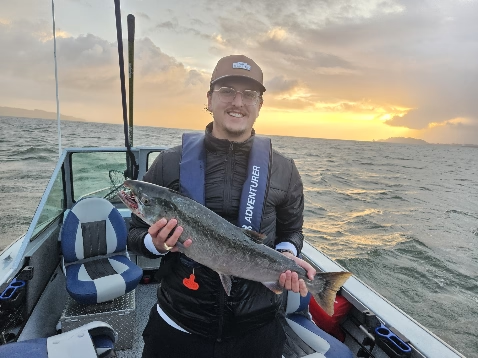
Coho fishing is my favorite type of Buoy 10 fishing charter. The fish are usually suspended this allows me to use less lead and even some divers. This means you get to feel the fish more during the fight. The lighter fishing pressure usually means more action with little competition from other boats. Pulling into the dock with dime bright fish in October is a thrill that’s harder to find upriver.
Fewer boats on the water is also good news if you like Crab. October marks the beginning of the best time of year to catch crab in the bay. A cooler full of Coho and Dungeness crab makes for a classic fall feast.
Trolling Techniques
This is probably the one thing that gets missed in a lot of Buoy 10 fishing tip discussions. In other bodies of water the general rule is to troll with the current. This allows you to cover more water. During Buoy 10 that pattern depends on where you’re at. The one major exception is during an incoming tide at a pinch point. These exist on the West side of both ends of the bridge. This tactic also works near the mill on the Oregon Side near Warrenton. FInally, this strategy is used near Buoy 10 itself. Take a cue from the other boats around you and it won’t be hard to figure out.
Speaking of other boats around you, my number one trolling tip is to be on the edge of the pack. This isn’t just for your sanity in managing your boat. The fish often approach from the sides and the first bites will usually be the boats on the edge. You will worry less about tangles, have an easier time landing fish, and the fish that see your gear will not have passed through as much of a gauntlet to get to you.
Boating Safety during Buoy 10
Being safe on the water during Buoy 10 can be complicated to say the least. Shipping lanes, other fishing boats, shifting tides, shallows, the occasional crab pot, and wind can make for a stressful day. If you are unsure of your abilities or your boat, make sure you pick a calmer day. Stay aware of your surroundings. Giant cargo ships can’t turn to avoid fishing boats. It is also a myth that having sport fishing gear out gives you the right of way on the water. That rule only really applies to cables and other heavier gear used by the commercial fleet.
How big should my boat be for Buoy 10 fishing?
Outside of fishing techniques this is one of the most often asked Buoy 10 fishing tip questions. Frustratingly, the answer is “it depends”. There are days when the river is a sloppy mess that should be left to the cargo ships. Other times its flat enough to use a stand up paddle board on.
A common error people make is to confuse boat length with the ability to handle rough water. Length does matter when it comes to having a smoother ride and keeping the bow from digging into a wave. Just as important as length is the amount of freeboard that your boat has. Freeboard is the distance from the water line to the top of your gunnel and the top of your transom. This determines how big a wave has to be before putting water in your boat. 28 inches of freeboard would be the minimum I recommend, however on rougher days that number could go higher.
Always check the weather, bar report, and tide forecasts ahead of time, especially paying attention to wind speed and direction. Bigger wind speeds and bigger tides mean more chop, especially when the tide is running. If the wind is high and pushing against a big tide then it will get sporty to say the least. If you are nervous, there is generally plenty of good fishing near the various launch sites. Stay close to the marina so you can duck in quickly if you are unsure. Ultimately you are the one responsible for your vessel’s safety.
How to Prepare for a day of Buoy 10 Fishing
The weather at Buoy 10 can be all over the map. One day the water will be flat, the sky clear, and you’re looking for shade. The next day will be socked in with fog. The day after that can be overcast and breezy. Always check the weather report before going. Mornings are usually cool. Things warm up around noon and then get breezy and cool again in the afternoon. Having something to keep the wind off of you is always a good idea. Choppy water in the afternoon will throw spray. A light rain jacket or poncho is generally recommended. A hoodie or sweatshirt over a t-shirt is OK for general wear most days. Lotion type sunscreen and sun-shirts are also a solid choice. Avoid spray-on type sunscreen. It can contaminate the fishing gear and repel the fish.
What to do About Seasickness
I recommend Meclizine the night before and one hour before you leave the dock. This is also known as “Less-Drowsy Dramamine(r)“. Also avoid large amounts of alcohol the night before. Even seasoned mariners can get seasick while nursing a hangover. Even on a calm day there are a lot of other boats around throwing wakes which will add more motion. Make sure that you are well hydrated before the trip and bring water or other beverages along with you.
Buying tackle
If you’re on a guided trip you don’t need to buy tackle, your guide will provide all of that. If you’re doing it on your own, don’t wait until the season starts. The tackle shops will often run out of the most popular items by the first week of August. This is true even for the big shops like fish-field, Fishermans Marine, Sportco, and Sportsman’s Warehouse. This isn’t their fault. The wholesalers they rely on will be out too. If you find yourself staring at empty pegs on the wall before your trip don’t despair. There are plenty of lures there that will still catch fish. The bait shops are also well stocked at this point since it’s also prime time for catching herring and anchovies.
Setting Expectations
Buoy 10 has a reputation for lots of fish. This is true, but there are also lots of boats on the water. There are good days and bad days. One of the biggest challenges of Buoy 10 fishing is that the water conditions are constantly changing. This means that a bite will heat up seemingly from nowhere. Bites last anywhere from 5 minutes to an hour, and then go quiet again. This off and on action can be frustrating for some. For me it’s part of what makes being a buoy 10 fishing guide so exciting.

This is also the one fishery where I can guarantee that we will be fishing close to other boats. There is always a chance of a tangle with someone’s gear. I’ve found that handling it with good nature tends to help everyone have a good day. Seals and Sea Lions can also create a challenge when it comes to getting a fish to the boat. This is just all part of the excitement.
Special Note on Hiring a Buoy 10 Fishing Guide
Maybe you just want to check it out before committing to a day in your own boat. Hiring an experienced fishing guide is a good way to improve your odds of success later on. My final Buoy 10 fishing tip is around what to keep in mind when hiring a Buoy 10 fishing guide.
More than any fishery in our area, Buoy 10 attracts a lot of guides from outside the area. Many of these guides return year after year and have the knowledge to offer an excellent experience for you. Unfortunately, Buoy 10 also attracts a lot of unlicensed people posing as guides trying to make a few bucks. These people often have fishing knowledge, but they have not been licensed by the states of Oregon or Washington. Licensed guides must be insured, pass US Coast Guard safety courses, know first aid, and carry insurance. Unlicensed guides may not have done any of those things. They most definitely will not be insured if something goes wrong. If your first choice guide is full, ask who the guide has on their “overflow list”. These are other guides that they trust to provide a good experience and might have open space.