
Columbia River Salmon Fishing an Iconic Experience
Sustainability for our Salmon Fishery
Before I talk about how much fun it is to fish for salmon on and near the Columbia River I want to talk about how we try to make this fishery sustainable. All types of salmon along the Columbia face challenges. This is why our hatcheries are so important to the survival of salmon and salmon fishing in the area. This is also why our seasons are tightly regulated and catches can be limited much more than we would like.
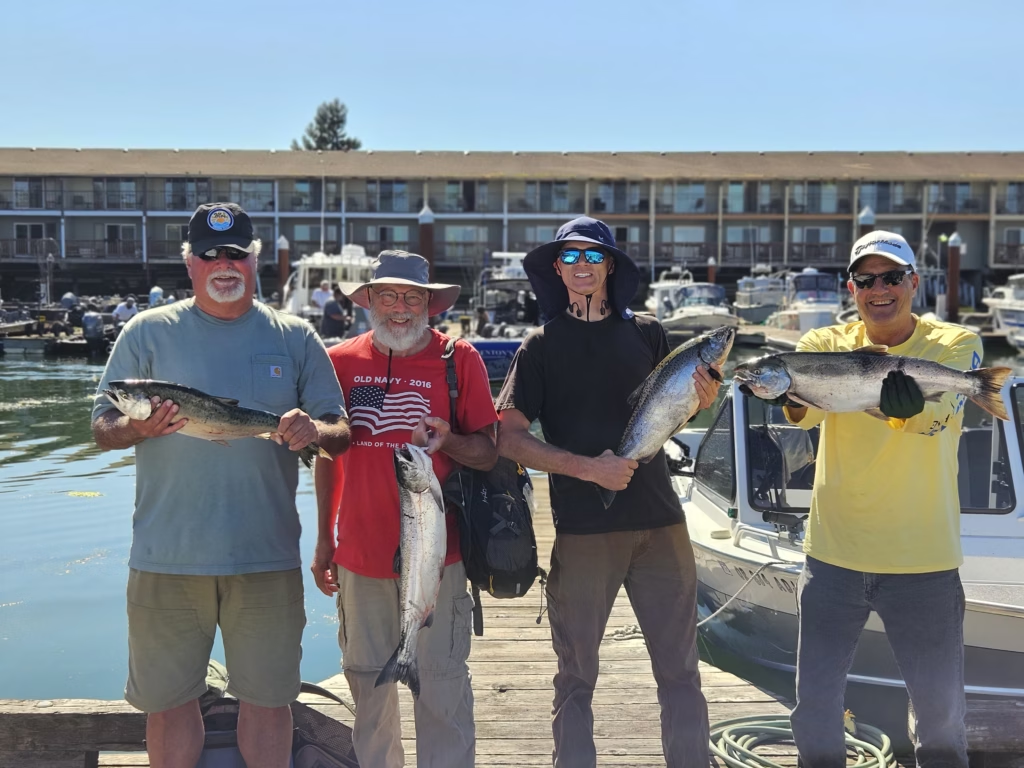
The first goal of salmon management in the Columbia is to return the various stocks to historic levels. Current salmon seasons are set each year after run estimates are calculated by fisheries scientists. These estimates calculate how many salmon will be left to reach the spawning areas after all of the natural and structural sources of mortality. These include sea lions, dams, and water quality. The vast majority of salmon do not make it back to the mouth of the river. In fact over half of the fish born in the Snake River don’t even make it down to the Columbia. If you really want to dig into what happens in the river the annual Comparative Survival Studies cover this in detail.
After those sources of mortality are calculated, the first “cut” goes to the river. This makes sure that there will be enough fish available for spawning and eventually recovering the salmon population. Anything left after that is divided up between tribes (50%), sport fishing (35%) and in-river non-tribal commercial harvest (15%). Harvest quotas include a percentage of released fish that do not survive. All of these numbers are calculated conservatively with extra buffers built in so that we do our best to not go over our collective limit and preserve the runs. Catches are monitored throughout the seasons as well as returns at the fish ladders over the dams. If the data looks like a run is smaller than predicted the seasons can get closed early. If the run starts coming in more heavily we may get an extension.
Now let’s talk about some of these amazing species and what it’s like to catch them.
Chinook Salmon, Kings of the Columbia
Columbia River Spring Chinook (Springers)

Peak Season: Mid April through Early June
Location: Columbia River
Spring Chinook are widely considered to be the highest quality salmon you can catch and eat. Their meat is often buttery. This makes it forgiving for those who tend to accidentally overcook their fish. As a general rule, the farther up river a fish is headed, the higher the quality of the meat.
While the colder waters in the spring tend to suppress their acrobatic nature, Spring Chinook can still put up quite a fight. They will often take long runs and thrash next to the boat when you try to net them. Each bite can be precious however since their numbers are not as strong as the fall Chinook.
Columbia River Summer Chinook (June Hogs)

Peak Season: Late May through July
Location: Columbia River
Summer Chinook share a lot in common with their spring brethren. Their meat tends to be high quality and they tend to be a bit rounder in their bodies. With the warmer waters their attitudes also heat up. These fish can not only take long runs but jump and provide a level of acrobatics that adds to the fun of catching them.
Just like Spring Chinook, the seasons for summers tend to be limited with some years not offering a season at all. We will often encounter them in the ocean in late June and July as well as if we get a late “Springer” season in the first half of June.
Columbia River Fall Chinook (Tule’s and Upriver Brights)

Peak Season: July through Early September
Location: Pacific Ocean, Buoy 10
Upriver Brights are destined for streams across the entire Columbia River basin. Just like Spring Chinook, the longer journey means a better eating fish. The warm river waters during August and September fire these fish up. They stuff themselves on herring and anchovies in the ocean and follow the schools of bait into the estuary. We typically start seeing these chrome beauties in mid-August in the river. Upriver brights will be in the mix in the ocean starting in late July.
Columbia River Silver Salmon (Coho Salmon)

Coho gather in the ocean before charging up the river and heading for smaller tributaries. They are distinguished from their larger Chinook brethren by their near lack of spots and white gums. In the ocean their scales can be quite loose and are known spread across the floor of the boat.
Coho generally spawn in the more western portions of the Columbia basin. As a result they tend to come into the river later. The season in the ocean typically opens up in late June and runs until mid to late August. The season in the river usually starts with the Chinook season on August 1st and carries on throughout the remainder of the year.
At the start of the season most of the fish will be in the 5 to 10 lb range. They then gorge themselves on bait fish just off the mouth of the Columbia River. They will often dip into the estuary chasing anchovies and herring. By the time their migration begins in late August, the average size moves to the 10 to 15 lb range. A few extra large fish grace boats each year. The Coho will continue to arrive long after the Chinook have moved up river. Mid-October can often bring a push of Coho and the benefit of very little fishing pressure.
While Spring Chinook have the highest nutrient content and best texture, I believe coho are the more flavorful salmon. Their meat is typically cherry red and is a highlight of a fall feast. Behind spring Chinook, Coho are my second favorite salmon to eat. For a seasonal dish, fall Coho pairs well with freshly picked chanterelle mushrooms.